



Notes on ghostwriting, books & the written word

The Writing Room.

A place to explore the craft behind a book: the listening, the thinking and the decisions that bring ideas to the page.

An introduction

A space for
words and ideas.

Welcome to my Writing Room: a place for thoughts in progress, books that stay with us and conversations about the craft of writing.

Here, I share reflections on language, ideas and the work of bringing them to the page. It’s an invitation into my world as a writer, and into the questions and discoveries that make each book its own.

Read about the craft ↓
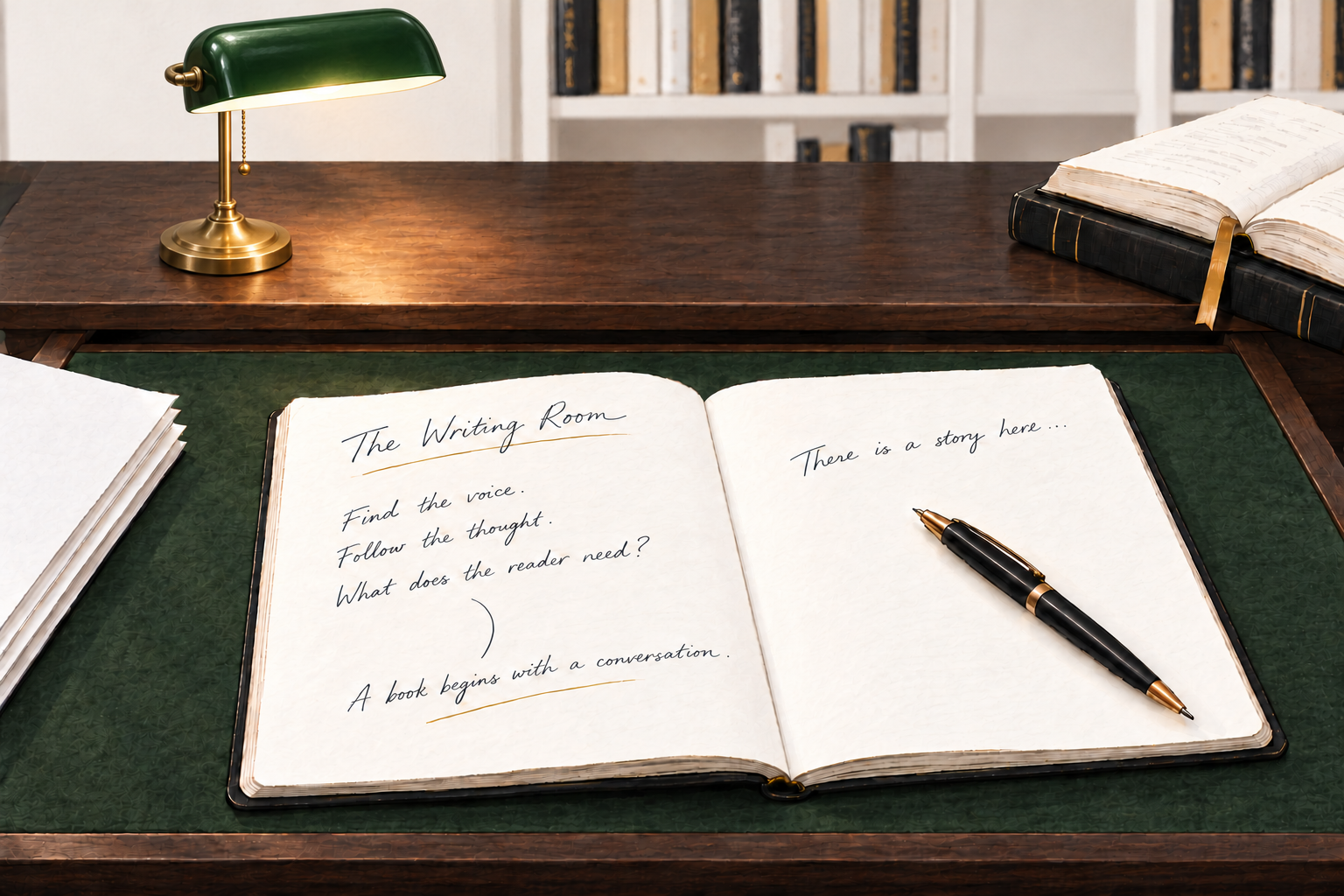
An open notebook on a green felt writing slide, with a green glass reading lamp and books behind it.
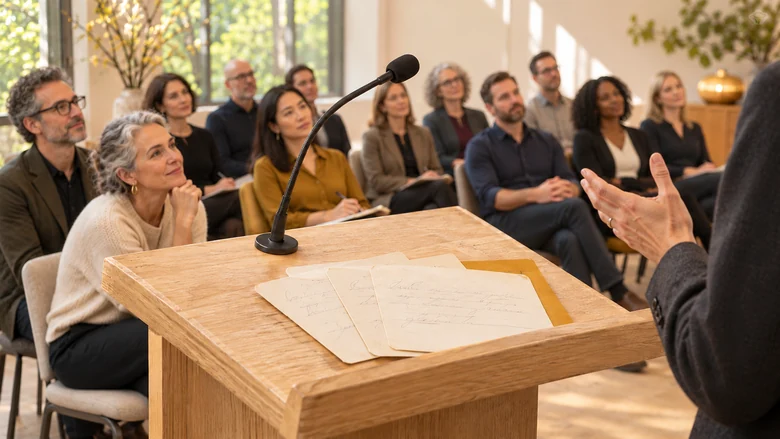
Handwritten notes on a lectern as a seated audience listens to a speaker.

From The Writing Room

Can I turn my talks, workshops or articles into a book?

If you’ve been teaching or writing about a subject for years, you may have the beginnings of a book. Here’s how to spot the idea that ties it all together.

Read about turning your material into a book
Two people review a printed manuscript together, one pointing to a passage while the other holds a pencil.

From The Writing Room

What’s it like to work with a ghostwriter on your first book?

What do you bring to a first conversation? When do you get to see the writing? Here’s how the collaboration works, from an early idea to a finished manuscript.

Read about working with a ghostwriter
A person reviews a proposal on a laptop with a calculator open on their phone.

From The Writing Room

How much do ghostwriters charge?

What should you budget for your first nonfiction book? See what a ghostwriting quote can cover and how to compare proposals.

Read the guide to ghostwriting fees
A man listens attentively as another person gestures during a conversation.

From The Writing Room

How to choose the right ghostwriter for your book

What can you learn from a first call? Here’s what to ask, how to read writing samples and what to look for in a good fit.

Read the guide to choosing a ghostwriter
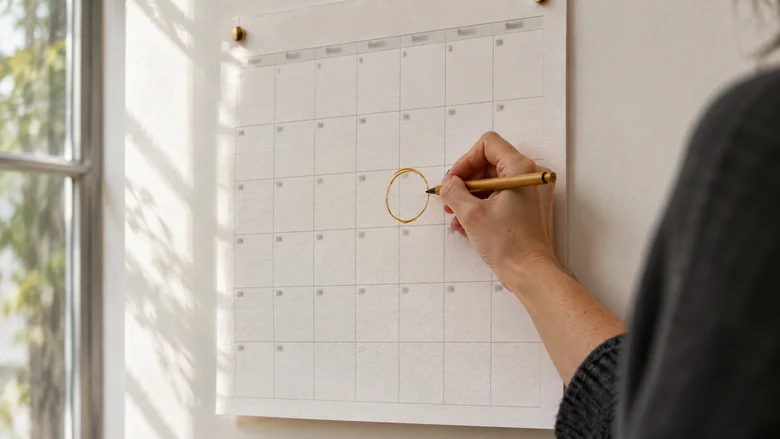
A person circles a date in gold on a wall calendar.

From The Writing Room

How long does it take to ghostwrite a book?

When will you have a manuscript, and how much time will you need to set aside yourself? Here’s what a six-month schedule might look like.

Read about ghostwriting timelines
A reader reaches for a gold hardback on a bookshop shelf.

From The Writing Room

What is a nonfiction book?

Not sure where your book idea fits? Start with what you want it to do for the reader.

Explore the kinds of nonfiction books

The craft of ghostwriting / By Wendi Jane Ellis

Writing in
someone else’s voice.

Ghostwriting is an unusual kind of writing. The words are my work, but the book belongs to someone else: their knowledge, their perspective, their name on the cover.

That requires more than fluency with language. I need to understand what the author means, recognise what matters to them and find a form that allows a reader to follow their thinking. The work is personal, even when the subject is technical or abstract.

Listening before writing

An author does not always arrive with a clear outline. They may have years of experience, a collection of notes or a question they cannot leave alone. Sometimes the most useful material emerges while they are explaining something they had assumed was too obvious to mention.

I listen for those moments and ask questions that help the author look more closely at their own ideas. What do they mean by a particular phrase? What led them to that conclusion? What might a reader need explained? Those conversations give the writing substance.

Understanding a voice

A written voice is more than a handful of familiar expressions. It appears in the way a person explains a difficult idea, the examples they choose, their humour and the distinctions they insist on making.

My task is to recognise those qualities and carry them into language that reads naturally on the page. I may reshape a sentence or develop an explanation, but the author should recognise their own thinking in the result. Feedback is essential to getting that right.

Giving ideas a shape

Expertise does not automatically arrive in chapter order. A book needs a structure that gives each idea its place and helps the reader understand why it matters.

I consider what the reader needs to know first, where an example would help and which ideas deserve further development. I also look for repetition and material that belongs elsewhere. These decisions are part of the writing itself, rather than a tidy-up at the end.

Working with care

Writing on someone else’s behalf brings responsibilities. I need to be precise about what they are claiming, careful with research and respectful of experiences they have trusted me to hear.

Confidentiality belongs within that care. The author decides what becomes public; my role is to help them express it well. A successful collaboration produces a book they can stand behind, written in language their readers can understand.

Have a subject you’d like to develop into a book? Explore my ghostwriting and editorial services.
The inspiration behind the image

A place
for Nisaba.

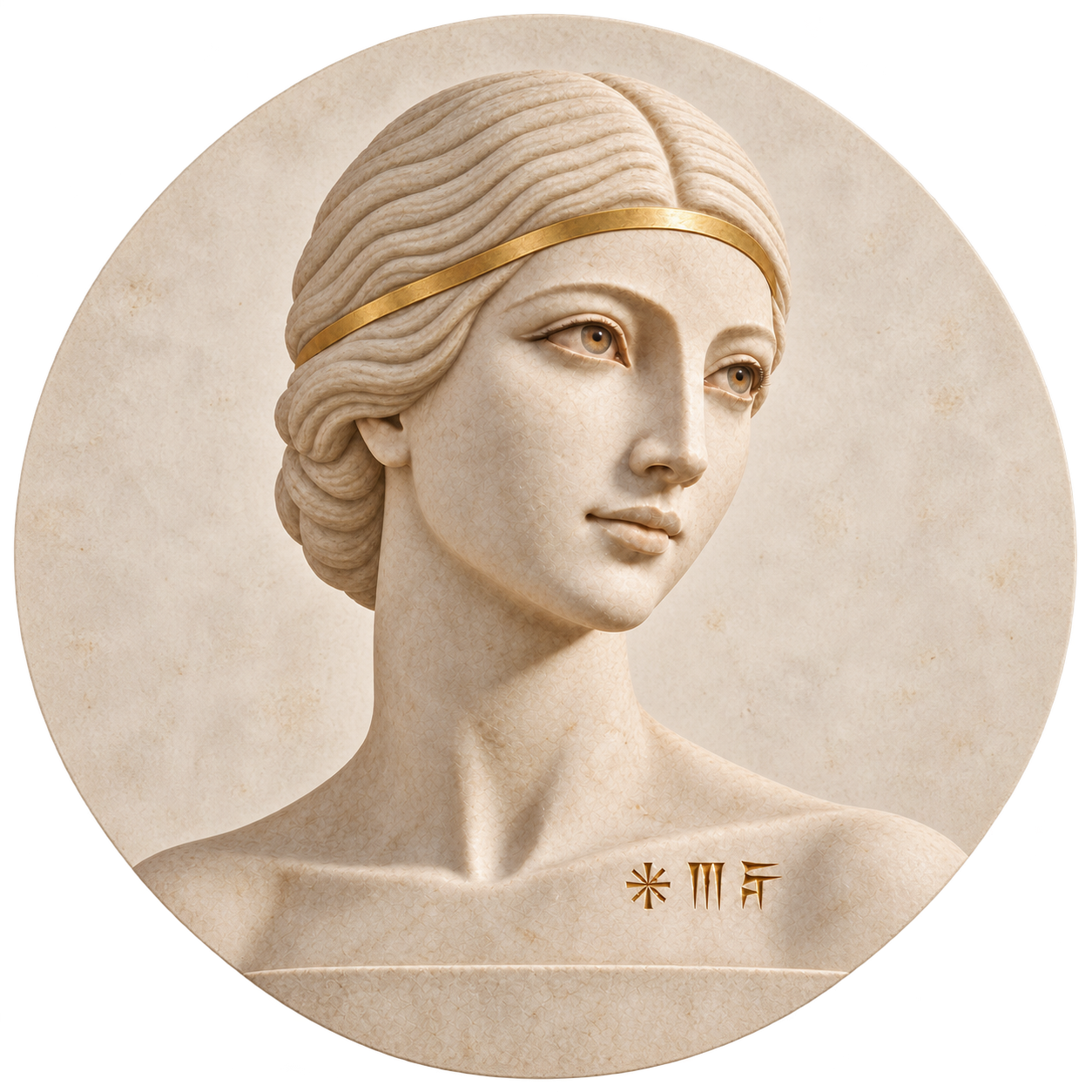
A pale sculptural interpretation of Nisaba, the Sumerian goddess of writing, with a gold hairband
Nisaba · A contemporary interpretation of the ancient patron of scribes.

Long before books took their familiar form, writing already had a divine patron.

Nisaba, also known as Nidaba, was a Sumerian goddess associated with writing and the scribal arts. Her role as a patron of scribes is documented in ancient Mesopotamian sources.

For me, her place here is a reminder that the written word has a long human history. Writing allows ideas to travel beyond the person who first expressed them. It gives experience a form that someone else can return to, question and understand.

The image on this page is a contemporary interpretation. I chose it as a symbol of my connection with books, language and the craft of writing.

Historical background: Ancient Mesopotamian Gods and Goddesses, Oracc — Nidaba.

From reflection to a book

What are you
thinking about?

If an idea has been asking for your attention, I’d be glad to hear about it.